Kemayu: An Elegant Script Font for Hand-Lettered Branding
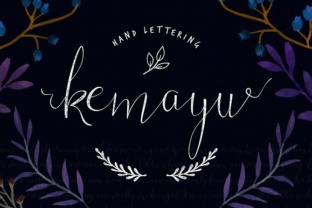
When I opened a blank brand board for a recent boutique skincare project, the usual suspects—clean sans serifs and rigid geometric fonts—felt too cold for the client’s vision. They wanted warmth, intimacy, and a touch of artisanal charm. That is when I pulled up Kemayu, an elegant hand lettering typeface that immediately shifted the mood of the layout. As a designer who tests dozens of Script Handwritten Fonts every month, I look for authenticity in the stroke, and Kemayu delivers a natural flow that feels less like digital typography and more like genuine ink on paper.
Testing Kemayu for Logo Design and Brand Identity
The first place I applied Kemayu was the primary logo mark. In logo design, script fonts often struggle with legibility or balance, but Kemayu uses handwriting techniques that maintain clarity without sacrificing style. I drafted a wordmark for the skincare line, and the connections between letters felt organic rather than forced. The varying stroke weights give it a dynamic rhythm, which is crucial when you are trying to create fun designs that still feel premium.
What stood out during this phase was how well Kemayu held its own as a standalone element. Many script fonts require heavy embellishment or complex ligatures to look interesting, but Kemayu relies on the beauty of its basic character set. For brand identity work, this means the logo remains recognizable even when scaled down for social media avatars or embossed on small product caps. It strikes a rare balance between being decorative enough to catch the eye and simple enough to remain professional.
Using Kemayu for Packaging Design and Product Labels
Moving from the screen to physical mockups, I placed Kemayu on a series of packaging labels. This is where many handwritten fonts fail; they can look messy when printed at smaller sizes or on textured materials. However, Kemayu’s elegant structure ensures that the essential information remains readable. I tested it on a matte label stock, and the smooth curves of the typeface contrasted beautifully with the minimal sans serif body text I paired it with.
For those who like to create fun designs, packaging offers the perfect playground. Kemayu adds a human touch to mass-produced items, making them feel handmade and curated. Whether it is a bakery box, a candle jar, or a clothing tag, this font injects personality into the unboxing experience. It does not scream for attention but invites the customer to look closer, which is exactly what you want in high-end retail packaging. The font’s versatility allows it to work as a headline on a large box or as an accent phrase on a small sticker, maintaining its charm across different scales.
Kemayu in Web Design Headers and Social Media Graphics
Digital application requires a different set of criteria. I integrated Kemayu into the website header for the project, using it for the hero section title. On web design platforms, script fonts can sometimes render poorly or load slowly, but as a well-optimized font file, Kemayu performs smoothly. It adds an immediate layer of sophistication to the homepage, setting the tone before the user even scrolls. The key here is restraint; I used it sparingly for headings only, ensuring that the user experience remained clean and navigable.
Social media graphics are another area where Kemayu shines. In a feed full of bold, blocky typography, a graceful script stands out. I created a series of Instagram posts featuring quotes and product highlights, and Kemayu provided the visual hook needed to stop the scroll. It works particularly well for lifestyle brands, creative studios, and influencers who want to convey approachability and elegance. The font’s inherent playfulness makes it ideal for seasonal campaigns or promotional content that needs to feel personal and engaging rather than corporate and stiff.
Pairing Kemayu with Serif and Sans Serif Fonts
No font exists in a vacuum, and successful branding relies on effective font pairing. Because Kemayu is a detailed script, it demands a supportive partner. I found that pairing it with a clean, modern sans serif creates a contemporary look that feels fresh and balanced. The simplicity of the sans serif grounds the whimsical nature of Kemayu, preventing the design from feeling too chaotic. Alternatively, pairing it with a classic serif font can evoke a more traditional, romantic aesthetic, suitable for wedding invitations or heritage brands.
When building a complete typography system, I recommend using Kemayu strictly for display purposes—headlines, logos, and short accents. Do not attempt to use it for body text or long paragraphs. Its intricate connections and variable widths make it unsuitable for extended reading. Instead, let it serve as the emotional anchor of your design, while a neutral typeface handles the informational heavy lifting. This hierarchy ensures that your brand communication is both visually striking and functionally clear.
Practical Considerations for Commercial Font Licensing
Before finalizing any client project, it is essential to review the commercial font licensing terms. While Kemayu is perfect for those who like to create fun designs, you must ensure your usage aligns with the license, especially if you are creating templates, merchandise, or large-scale advertising campaigns. Always check if the license covers webfont usage if you plan to embed it directly into a website, or if you need a separate desktop license for print assets. Understanding these details upfront prevents legal issues and ensures a smooth workflow from concept to delivery.
In conclusion, Kemayu is a versatile and expressive tool for any designer’s toolkit. It bridges the gap between casual handwriting and refined typography, making it an excellent choice for brands that value authenticity and elegance. Whether you are refreshing a café’s visual identity, designing bespoke wedding stationery, or launching a new product line, Kemayu offers the stylistic flexibility and professional polish needed to make a lasting impression. It is not just a font; it is a design element that brings soul and character to your creative work.